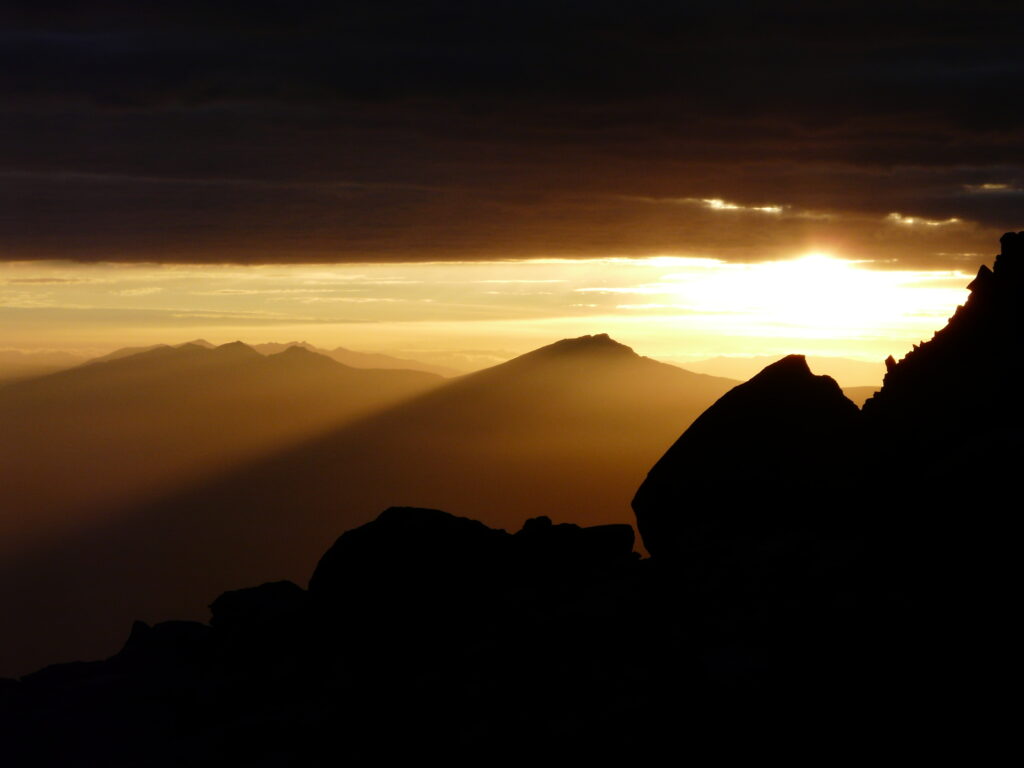
Trekking and mountaineering in the Cordillera Vilcanota, Lares region, Colca Canyon and Lake Titicaca, including two 6,000-metre peaks – highlights of southern Peru.

A unique journey through southern Peru combining culture, trekking and 6,000-metre summits

On this 23-day adventure trip, discover the most beautiful regions of southern Peru: from Cusco and the Sacred Valley to the Rainbow Mountains and the mighty Cordillera Vilcanota, on to Lake Titicaca, the Colca Canyon and the White City of Arequipa. Alongside outstanding cultural highlights, you can expect spectacular trekking routes, authentic encounters with Andean communities and two summit ascents above 6,000 metres: Hualca Hualca and Chachani. A perfect combination of culture, nature and high-altitude adventure in the Peruvian Andes.

Ascents of two 6,000-metre peaks: Chachani and Hualca Hualca

This exceptional trekking and mountaineering journey takes you to the highlights of southern Peru – an intensive mix of culture, nature and alpine adventure. The tour begins in the ancient Inca capital of Cusco, from where we explore the Sacred Valley with Pisaq, Chinchero and Ollantaytambo. We then experience the full diversity of the Andes on several treks: the Lares route, the wild Cordillera Vilcanota with its glaciers, the famous Rainbow Mountains (Vinicunca) and the deeply cut Valle Rojo.

Another highlight is the spectacular circuit around Ausangate, crossing passes above 5,000 metres, passing turquoise lagoons and enjoying unforgettable mountain panoramas. We continue to Lake Titicaca with its floating Uru Islands, to Puno and the ruins of Sillustani. In the Colca Canyon we marvel at majestic condors before climbing Hualca Hualca (6,025 m). The journey concludes in the colonial city of Arequipa and – for ambitious mountaineers – with the ascent of Chachani (6,057 m).

This trip is ideal for adventurous hikers and mountaineers with very good fitness who want to actively experience the highlights of southern Peru.

Tour Highlights

Cusco

Pisaq

Saqsayhuamán

Rainbow Mountains

Valle Rojo

Ausangate Circuit

Cordillera Vilcanota

Colca Canyon

Lake Titicaca

Uros Islands

Sillustani

Atoja

Ollantaytambo

Arequipa

Puno

Hualca Hualca

Chachani

Starting point: Cusco, Peru
Tour duration: 24 days

Dates

03 March – 26 March 2026

25 June – 18 July 2026

02 August – 25 August 2026

03 October – 26 October 2026

Prices

From 2 participants: on request

From 4 participants: on request

From 6 participants: on request

Included Services

Airport transfers

All accommodation in simple hotels or tents

Entrance fees

City tours

Remote WhatsApp support by Thomas Wilken

Guided hikes

Private transport to mountain regions

Comfortable bus journeys between cities

Tour leadership in German or at least English (depending on group size)

Organised trekking around Cusco, Lares and in the Cordillera Vilcanota

Two summit ascents with full organisation and professional guides

Boat trip on Lake Titicaca

Meals during treks, on Hualca Hualca and Chachani; breakfast always included

Not Included

International flights

Travel accident and health insurance

Luggage and trip cancellation insurance

Meals and drinks not mentioned

Tips

Personal expenses

Group Size

Minimum: 2 participants

Maximum: 10 participants

Special Requirements

Very good physical condition (daily walking times of 6–10 hours, up to 1,200 m ascent)

High-altitude experience and familiarity with crampons and glacier equipment

Good altitude tolerance up to over 6,000 m

Team spirit and willingness to forego comfort in remote regions

Additional Information

A good general level of fitness is required and highly beneficial for this tour.

Detailed Itinerary (Summary Translation)

Day 1: Arrival in Cusco (usually via Lima). Briefing and rest.
Day 2: Guided city tour of Cusco, optional visit to Saqsayhuamán.
Day 3: Sacred Valley: Pisaq, Ollantaytambo.
Day 4–6: Lares Trek with hot springs, mountain passes and camps with local families.
Day 7–11: Cordillera Vilcanota & Ausangate Circuit, including Rainbow Mountain and passes above 5,000 m.
Day 12: Bus journey to Puno.
Day 13: Boat tour on Lake Titicaca – Uros and Taquile Islands.
Day 14: Ascent of Atoja (4,450 m) and visit to Sillustani.
Day 15–17: Colca Canyon, condor observation and approach to Hualca Hualca.
Day 18: Summit ascent of Hualca Hualca (6,025 m).
Day 19–20: Transfer to Arequipa and city tour.
Day 21–22: Optional Chachani ascent (6,057 m).
Day 23: Reserve day in Arequipa.
Day 24: Return flight.

Options

⇒ If you wish to shorten the trip, the ascent of Chachani can be omitted.
⇒ If you have more time, you can arrive two days earlier and visit Machu Picchu.

Detailed Itinerary – Peru Expedition

Day 1: Arrival in Cusco

Arrival in Cusco, usually via Lima. You will be met at the airport and transferred to your hotel. After the long international flight, the focus today is on rest and acclimatisation. Those who feel up to it can already take a short walk through the historic centre of the former Inca capital.

Hotel Arcagyl or similar (valid for all hotel stays)
Meals: (-/-/-)


Day 2: City Tour of Cusco

Today we explore the former Inca capital of Cusco on foot with our local guide. We visit the most important sights of the historic old town, including colonial churches built on Inca foundations, narrow alleys and lively plazas.

Along the way there are plenty of opportunities for snacks and refreshments. After the guided tour, there is ample free time. You may choose to rest or continue exploring this architecturally unique city on your own. Optionally, you can hike or drive up to the impressive ruins of Saqsayhuamán, which offer great views over Cusco.

► Walking time: approx. 4–5 hours
Overnight in the same hotel
Meals: (B/-/-)


Day 3: The Sacred Valley

Today we visit the Sacred Valley of the Incas. On the way, our vehicle stops at scenic viewpoints before we reach the archaeological site of Pisaq. Our guide explains the purpose of the complex and introduces us to the temple with its ancient sundial.

From the ruins we hike for about 1.5 hours down to the village of Pisaq, home to one of the richest and most colourful markets in southern Peru (now held daily). We then continue down the Sacred Valley to the impressive Inca fortress of Ollantaytambo. In the afternoon there is time to explore the ancient Inca town and enjoy dinner.

► Approx. 1 hour drive to Ollantaytambo, hike approx. 3 hours
Overnight in Ollantaytambo
Meals: (B/-/-)


Day 4: Lares Trek – Hot Springs – Huacawasi

We pick you up at the hotel and drive through the Sacred Valley to Calca. The journey continues through Andean valleys, passing herds of alpacas and llamas. At the pass we enjoy beautiful views of the surrounding mountains before descending into the Lares Valley. The vegetation gradually changes as we reach the village of Lares, known for its mild climate.

We drive directly to the Lares hot springs, the starting point of our trek. Here we enjoy a relaxing bath in the warm thermal pools and have lunch. Afterwards we begin our hike, following a stream through a small eucalyptus forest until we reach the village of Huacawasi. We set up camp near local indigenous families.

► Drive: approx. 2–3 hours
Hiking time: approx. 3 hours, +400 m
Meals: (B/L/D)


Day 5: Huacawasi – 4,500 m Pass – Yanahuara

From Huacawasi we start by ascending a slope for a short time. After about 200 metres of ascent, we enter a broad valley that leads gently up to the pass. Along the way we pass llama herds and small farming settlements. Children often greet us and ask for sweets.

In the soft morning light we admire Cerro Colce Cruz (5,700 m) and Nevado Pumahuanca (5,300 m). From the pass, a beautiful view opens up over a high-altitude lagoon. After descending about 150 metres, we enjoy lunch by the water. We then continue along the lakeshore, passing native Queñual trees, until we reach our campsite near Yanahuara, located on a flat meadow beside a stream.

► Hiking time: approx. 6 hours
Ascent: +900 m / Descent: –800 m
Meals: (B/L/D)


Day 6: Yanahuara – Queñual Forest – Ollantaytambo – Cusco

Our final trekking day begins with a landscape reminiscent of the forests near Huaraz. We hike through a native Queñual forest and enjoy wonderful views over the Urubamba Valley below. Shortly before reaching the village of Yanahuara, we stop for lunch on a small meadow.

After about one more hour we reach the road to Ollantaytambo, where we bid farewell to our trekking team. From there we drive to Ollantaytambo and continue on to Cusco.

► Hiking time: approx. 4 hours
Ascent: +100 m / Descent: –1,000 m
Drive: approx. 2 hours
Overnight in Cusco
Meals: (B/L/-)


Day 7: Cordillera Vilcanota – Cusco – Tinqui – Ranrapata Camp (4,315 m)

Early departure from Cusco (3,400 m) to Tinqui (approx. 3,900 m), a drive of about 3–4 hours. Here we meet our support team and begin the trek. The trail leads through small Andean villages, past agricultural terraces and offers first views of the Cordillera Vilcanota.

We ascend gradually to Ranrapata Camp (approx. 4,315 m), where our tents are already set up.

► Hiking time: approx. 5–6 hours
Ascent: +500 m / Descent: –100 m
Meals: (B/L/D)


Day 8: Ranrapata – Puka Rumi Pass (4,850 m) – Cusipata Camp (4,639 m)

Today is a long and impressive stage. From Ranrapata we steadily climb to the Puka Rumi Pass (approx. 4,850 m), enjoying magnificent views of the snow-covered peaks of the Cordillera Vilcanota. After the pass, we descend through wide highland valleys populated by llamas and alpacas until we reach Cusipata Camp.

► Hiking time: approx. 6–7 hours
Ascent: +700 m / Descent: –400 m
Meals: (B/L/D)


Day 9: Cusipata – Rainbow Mountain (Vinicunca, 5,040 m) – Ausangate Cocha

Today we reach one of the highlights of the journey. Early in the morning we ascend to the Rainbow Mountain (Vinicunca, 5,040 m). The vivid colours of the sediment layers and the views of Ausangate are unforgettable. After descending across the high plateau, we continue hiking to Ausangate Cocha Camp (approx. 4,656 m).

► Hiking time: approx. 6 hours
Ascent: +600 m / Descent: –550 m
Meals: (B/L/D)


Day 10: Ausangate Cocha – Palomani Pass (5,200 m) – Wanu Wanu Camp

The king stage of the trek. From Ausangate Cocha we climb to the Palomani Pass (5,200 m), the highest point of the entire trek. Spectacular views of glaciers and rugged peaks reward the effort. We then descend through a side valley, often encountering grazing llamas, to Wanu Wanu Camp.

► Hiking time: approx. 7 hours
Ascent: +600 m / Descent: –650 m
Meals: (B/L/D)


Day 11: Wanu Wanu – Jampa Pass (5,070 m) – Pacchanta – Cusco

A final high pass awaits us today. We climb to the Jampa Pass (5,070 m) and then descend across high plains dotted with turquoise lagoons to Pacchanta (approx. 4,000 m). Here we relax in the hot springs before returning by vehicle to Cusco.

► Hiking time: approx. 6 hours
Ascent: +500 m / Descent: –1,100 m
Overnight in Cusco
Meals: (B/L/-)


Day 12: Transfer to Puno

Today is reserved for the bus journey to Puno, lasting about 8 hours. The route passes snow-covered volcanoes, green grasslands and several lagoons, crossing one of Peru’s most impressive landscapes. A highlight is the La Raya Pass. We arrive in Puno in the afternoon and explore the harbour area.

► Hotel Camino Real
Meals: (B/-/-)

Day 13: Uros Islands and Taquile

Today we experience one of the most iconic excursions on Lake Titicaca. By boat we cross the vast, deep-blue waters of the world’s highest navigable lake and visit several of the floating Uros Islands, constructed entirely from reeds.

The Uros people, also known as Uru, are considered extinct as an ethnic group since 1958, but their descendants continue to preserve parts of their culture. Historically, they referred to themselves as Kot-Suns – “people of the lake” – and were regarded as the wildest tribe in the Inca Empire, with noticeably darker skin. By retreating to their floating reed islands, they were never conquered by the Incas.

In the 19th century, around 4,000 families still lived on the reed islands. Today, approximately 1,500–2,000 people remain, mostly mestizos with Aymara and Quechua roots, earning their living almost exclusively from tourism. The archipelago consists of around 80 islands with nearly 100 families, including a dedicated school island.

We then continue by boat to Taquile Island, famous for its traditional textile culture, where men knit intricate hats by hand. We enjoy a hike across the island and take in the almost Mediterranean scenery.

► Same hotel in Puno
Boat ride: approx. 2 hours
Hiking: approx. 2 hours, +400 m
Meals: (B/-/-)


Day 14: Ascent of Atoja and Visit to Sillustani

Today we return to the mountains. Our goal is Cerro Atoja (4,450 m), located above the indigenous village of Chucuito. We reach the starting point by camioneta, which departs only once it is completely full. Local people travel with large jute sacks filled with goods—mostly food—to sell at nearby village markets.

The ascent is neither particularly steep nor very long, making it a pleasant and achievable mountain tour. Along the trail we encounter lush vegetation, even near the summit, where a small weather station is located.

From the top, we enjoy a breathtaking view across the endless expanse of the deep-blue Lake Titicaca. On the far shore, the peaks of Bolivia’s Cordillera Real are already visible, joined by several Peruvian volcanoes that complete the panorama. Depending on the group’s preference, we return to Puno by one of the many local buses.

In the afternoon, we visit the impressive burial towers of Sillustani, rising steeply from a wide, green pastoral landscape dotted with lagoons. The programme includes an archaeological museum and a visit to a traditional farmhouse. We are guided through the modest living quarters and stables. The family’s main assets are alpacas and other livestock, which are carefully tended. We are offered locally produced cheese, corn and delicious potatoes, all of which can be purchased or simply enjoyed while supporting the family directly.

► Same hotel in Puno
Drive: approx. 20 minutes
Hiking: approx. 4–5 hours, +700 m
Meals: (B/-/-)


Day 15: Transfer to the Colca Canyon – Hike near Chivay

Today we travel to the Colca Canyon, one of the deepest canyons in the world, located between Chivay and Cabanaconde. From Puno, we take a tourist bus to Chivay, a small Andean town with around 3,600 inhabitants and an important transport hub in the Colca Valley.

After arrival, we set out on a short but scenic hike. We pass ancient stone ruins and ascend into a lush, green high valley inhabited by llamas, cattle and crossed by clear mountain streams. To conclude the hike, we climb a small ridge that offers impressive views deep into the Colca Valley.

► Overnight in Chivay
Hotel: Colca Terra
Bus ride: approx. 4 hours
Hiking: approx. 4–5 hours, +600 m
Meals: (B/-/-)


Day 16: Table Mountain Ascent or Hot Springs

We start early from Chivay. Today there is the option to climb a table-mountain-like summit rising to approximately 4,800 m above the town. The ascent involves around 1,200–1,300 metres of elevation gain and rewards us with magnificent views across the Colca Valley.

Alternatively, those who prefer a more relaxed day can visit the hot springs of La Calera and enjoy some well-deserved rest. The mountain ascent is highly recommended, however, as it offers outstanding panoramic views.

► Hiking time: approx. 6 hours
Ascent: approx. +1,200 m
Meals: (B/-/-)


Day 17: Condor Observation and Approach to Hualca Hualca

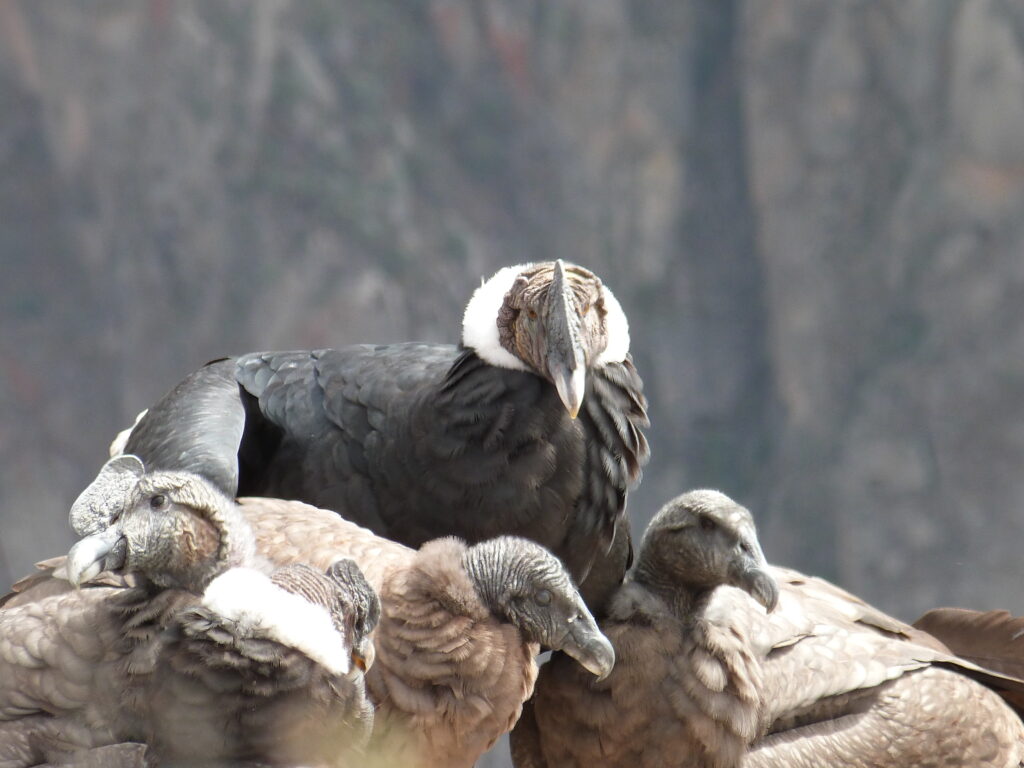
We start very early today to reach the famous Cruz del Condor viewpoint in time. With a bit of luck, we can observe majestic Andean condors soaring on the morning thermals. The surrounding landscape, with its dramatic canyon walls and green terraces, is equally impressive.

We hike through fertile pastures and agricultural areas. The Colca Valley is extremely productive, with potatoes, grains and vegetables being cultivated. Farmers often travel directly from their fields to the bus, transporting their produce in large sacks and selling it at very low prices.

Later, we travel to Pinchollo, where we begin the approach to the high camp of Hualca Hualca.

► Meals: (B/L/D)


Day 18: Summit Ascent of Hualca Hualca (6,025 m)

We set off around 4:00 a.m. The ascent begins by crossing a high plateau before carefully progressing with ice axes across hard-frozen snow towards the basin below the main summit. At sunrise, we are rewarded with spectacular views of penitentes – upright blades of ice that can reach heights of over one metre.

Progress is slow and careful to avoid injury. Upon reaching the main summit of Hualca Hualca, the “Peruvian Matterhorn” rises impressively before us. The mountain can be climbed via the Inca Route (moderate, grade 4) or the Iván Route (more demanding, grade 5–6). After a further 2–3 hours, we reach the summit.

We then descend, dismantle the high camp and re-establish it about 800 metres lower. Depending on the group’s condition, we arrive back in Pinchollo in the early to late afternoon.

► Hiking time: approx. 6–8 hours
Meals: (B/L/-)


Day 19: Transfer to Arequipa

A more relaxed day. We travel by bus from Pinchollo to Arequipa in about 5 hours, passing through spectacular landscapes. Arequipa, Peru’s second-largest city, is considered one of the most beautiful cities in the country and has now exceeded one million inhabitants.

► Bus ride: approx. 5 hours
Hotel in Arequipa: La Compañía
Meals: (-/-/-)


Day 20: City Tour of Arequipa

Today we explore Arequipa, known as the “White City.” The name does not refer to whitewashed colonial buildings but rather to the historical population of light-skinned immigrants. Even today, a relatively large proportion of residents are descendants of Spanish settlers.

Arequipa has grown into Peru’s second-largest city and is the most important metropolis between Lima and La Paz. While it sees itself as a rival to Lima, it is far calmer and more manageable. Thanks to its altitude of around 2,300 metres and its distance from the coast, Arequipa enjoys a mild and pleasant climate year-round.

► Guided city tour: approx. 4 hours
Same hotel
Meals: (B/-/-)


Day 21: Return Flight or Chachani Base Camp

Either return flight or optional continuation:

Today we drive to the Chachani Base Camp. A 4WD vehicle takes us up to approximately 4,900 m, where the track ends on a high plateau. Ideally, we camp here, although it is also possible to walk about one additional hour on relatively flat terrain to the main camp. Tents are set up and we spend the night here.

The physical effort today is moderate, making this ascent a good continuation after Hualca Hualca. Due to the relatively small elevation gain, there is no need for an extremely early start, although we usually set off around 4:00 a.m.

► Drive: approx. 3 hours
Short hike: approx. 1 hour
Overnight in tents
Meals: (B/L/D)


Day 22: Summit Ascent of Chachani (6,057 m)

The ascent begins over steep scree slopes on faint trails. Although steep, the terrain is generally good to walk on. Higher up, we cross another slope free of ice but covered with loose volcanic sand. Clear tracks lead us to the panoramic summit of Chachani.

The descent follows the same route. The ascent takes about 6–8 hours, with around 1,200 metres of elevation gain; the descent takes approximately 4 hours. Afterwards, we return by 4WD vehicle to Arequipa, where a well-earned rest awaits.

► Ascent: approx. +1,200 m
Hiking time: 6–8 hours
Same hotel
Meals: (B/L/-)


Day 23: Reserve Day – Arequipa

A buffer day in case of weather delays or acclimatisation needs. If not required, the day can be used to further explore Arequipa. Optional excursions can be organised on request.

► Same hotel
Meals: (B/-/-)


Day 24: Return Flight

The final day of the journey. After the airport transfer, we fly home, once more passing over the Andes and the Amazon basin. The views serve as a powerful reminder of the many extraordinary experiences of this journey and provide plenty of inspiration for future adventures. It certainly does not have to be your last time in South America.

► Airport transfer: approx. 30 minutes
Meals: (B/-/-)


Mountain climbing in Southern Peru with Misti Volcano and 6000er Chachani, Machu Pichu and Titicaca lake

Round Trip in Southern Peru with the Colca Canyon, Lake Titicaca, Cusco and Ascents of Misti and Chachani

Chachani is considered one of the easiest 6,000-metre peaks in Peru

This journey through southern Peru offers a remarkable variety of highlights. Mountains, jungle, deserts, beaches, Inca ruins – Peru is undoubtedly one of the most diverse travel destinations in the world. Many of these contrasting landscapes are encountered on this tour: large isolated volcanic peaks such as Misti and Chachani, deep canyons, wild jungle regions, vibrant cities, crystal-clear mountain lakes, famous Inca ruins and even a true sand desert.


Peru’s Highlights: From the Desert to the Summits

The tour starts and ends in Lima, now home to around 11 million inhabitants and one of the largest cities in South America. After an extensive city tour, we continue to Ica and the nearby oasis of Huacachina, surrounded by towering sand dunes. Here we undertake a desert hike as an introductory tour, explore the dunes and try sandboarding under professional guidance.

We then travel by bus to Arequipa, Peru’s second-largest city and climatically one of the most pleasant, known for its interesting colonial architecture. From here, the first acclimatisation hikes begin: Cerro Verde near Cayma, located in a rare desert landscape, followed by the Colca Canyon between Chivay and Cabanaconde, the deepest canyon in the world. In addition to spectacular scenery, condors can often be seen circling overhead.

Next, we head to Lake Titicaca near Puno at an altitude of 3,800 metres. Besides an acclimatisation hike on Atoja (approx. 4,500 m) and a visit to the Inca burial site of Sillustani, a boat trip on the world’s highest navigable lake is included.

From here we continue to Cusco, perhaps the most famous city in South America and certainly one of the most beautiful. After extensive sightseeing, we leave Cusco for Ollantaytambo, where impressive Inca ruins can already be admired. We then travel by train to Aguas Calientes, a town that mainly serves as a gateway but is the starting point for a unique excursion the following day: Machu Picchu.

By spending the night nearby, we can avoid the crowds and reach the ruins via ancient stone Inca paths through the jungle. After this highlight, we return to the “White City” of Arequipa to climb the extinct volcanoes Misti (5,811 m) and Chachani (6,075 m). With Chachani, we summit a true 6,000-metre peak.


Tour Information

Highlights

  • Sand Desert

  • Huacachina

  • Islas Ballestas

  • Colca Canyon

  • Lake Titicaca

  • Uros Islands

  • Sillustani

  • Colca Valley

  • Ollantaytambo

  • Machu Picchu

  • Misti

  • Chachani

Duration: 24 days


Dates

  • 25 June – 18 July 2025

  • 02 August – 25 August 2025

  • 03 October – 26 October 2025

  • 03 March – 26 March 2026

  • 25 June – 18 July 2026

  • 02 August – 25 August 2026

  • 03 October – 26 October 2026

Custom dates available on request.


Prices (per person)

  • From 2 participants: €2,945

  • From 4 participants: €2,845

  • From 6 participants: €2,745


Included Services

  • Airport transfers

  • All accommodation in simple hotels or tents

  • Entrance fees

  • Tour leadership in German or at least English (depending on group size)

  • Desert excursion

  • Two mountain ascents with full organisation, guides and rental equipment

  • Boat trip on Lake Titicaca

  • Meals during ascents of Misti and Chachani

  • Breakfast throughout the tour


Not Included

  • Flights

  • Travel accident and health insurance

  • Baggage and trip cancellation insurance

  • Meals and drinks not mentioned

  • Tips

  • Personal expenses


Group Size

  • Minimum: 2 participants

  • Maximum: 10 participants


Additional Information

A good general level of fitness is required and highly beneficial for this tour.


Detailed Itinerary

Day 1: Arrival in Lima

Arrival in Lima, one of South America’s largest cities with around 11 million inhabitants. After transfer to the hotel, the focus is on rest. Those who wish can explore the city a little. Optionally, the day ends with a first traditional Peruvian dinner in a simple local restaurant.

► Hotel: Ducado Inn or similar
Meals: (-/-/-)


Day 2: Lima – Ica

In the morning we explore part of Lima’s city centre, especially the vast Plaza de Armas, surrounded by government buildings. From here, all distances in Peru are officially measured. Nearby stands a church honouring Francisco Pizarro – a controversial figure linked to both the suffering and wealth of Peru’s colonial history.

We then visit the lively Mercado Central, offering a colourful preview of what awaits us in Peru. In the afternoon we travel by bus to Ica, passing Sahara-like desert landscapes along the coast.

► Overnight in Ica, Hotel Belle Sand
Meals: (B/-/-)


Day 3: Oasis of Huacachina

Early in the morning we head to the nearby oasis of Huacachina, surrounded by massive sand dunes. To avoid the heat, we start our desert hike early. At first, the sand is firm and easy to walk on, but as the terrain steepens, the ascent becomes increasingly strenuous—an excellent preparation for later volcanic ascents.

After the hike, we return to the hotel and have lunch. The afternoon is free to relax in hammocks. In the evening, those with energy can try sandboarding, guided by local experts.

► Hiking time: approx. 2 hours, +100 m (more during sandboarding)
Overnight in Ica, same hotel
Meals: (B/-/-)


Day 4: Islas Ballestas – Night Bus to Arequipa

A short drive takes us to Paracas, the starting point for our boat tour to the Islas Ballestas. This rugged island group features dramatic cliffs, sandy beaches and abundant wildlife: pelicans, blue-footed boobies, cormorants and, most notably, large sea lions. With some luck, dolphins may also be spotted.

After returning to Ica, we board a comfortable overnight bus to Arequipa, crossing dunes, coastal regions and high Andean passes above 4,000 metres.

► Boat tour: approx. 2 hours
Overnight on night bus (approx. 12–15 hours)
Meals: (B/-/-)


Day 5: Arequipa

Arrival in Arequipa, Peru’s second-largest city. After checking into the hotel, the afternoon is free to rest or join a short city walk. In the evening, we enjoy dinner in a traditional restaurant.

Arequipa is known as the “White City,” not due to whitewashed buildings but because of its historical population of light-skinned settlers. Located at 2,300 metres above sea level, it enjoys a mild climate year-round.

► City walk: approx. 4 hours
Hotel: La Compañía
Meals: (B/-/-)


Day 6: Cerro Verde

Our first acclimatisation hike takes us to Cerro Verde near Tiabaya, set in a rare desert landscape. From a small pass, we hike along a scenic ridge to a summit crowned by a Madonna statue. Beyond it, fascinating sand-covered rock formations and cacti dominate the scenery. An additional shapely summit just over 3,000 metres can be easily climbed.

► Drive: 30–45 minutes
Hike: approx. 3 hours, +400 m
Overnight in Arequipa
Meals: (B/-/-)


Day 7: Colca Canyon

We travel by bus to Chivay, a small Andean town and hub of the Colca Valley. After arrival, we hike past stone ruins into a lush high valley with llamas, cattle and clear streams. A small ridge offers impressive views deep into the Colca Canyon.

► Overnight in Chivay, Hotel Colca Terra
Bus: approx. 4 hours
Hike: 4–5 hours, +600 m
Meals: (B/-/-)


Day 8: Mirador Cruz del Condor – Cabanaconde

An early start to reach the Cruz del Condor viewpoint, where Andean condors can often be seen soaring. We then continue to Cabanaconde, a traditional village at the end of the canyon. In the afternoon, we descend partway into the canyon, enjoying dramatic views.

► Overnight in Cabanaconde
Hike: approx. 2–3 hours
Meals: (B/-/-)


Day 9: Table Mountain above Chivay or Hot Springs

Optional ascent of a table-mountain-like summit above Chivay (approx. 4,800 m, +1,300 m ascent). Alternatively, relax in the La Calera hot springs.

► Hiking time: approx. 6 hours
Meals: (B/-/-)


Day 10: Transfer to Puno

A full-day bus journey to Puno, passing snow-covered volcanoes, green grasslands and lagoons. Arrival at Lake Titicaca in the afternoon.

► Hotel: Camino Real
Meals: (B/-/-)


Day 11: Ascent of Atoja

Hike up Cerro Atoja (4,450 m) above the village of Chucuito. A moderate ascent with wonderful views over Lake Titicaca and the Bolivian Cordillera Real.

► Hiking time: 4–5 hours, +700 m
Meals: (B/-/-)


Day 12: Lake Titicaca – Uros Islands – Sillustani

Boat trip to the floating Uros Islands, followed by a visit to the burial towers of Sillustani in a green pastoral landscape. Visit to a local farmhouse with traditional products.

► Same hotel
Meals: (B/-/-)


Day 13: Puno – Cusco

Scenic bus journey to Cusco, passing alpine landscapes and Andean villages. Arrival in the historic Inca capital in the evening.

► Hotel: Andariego
Meals: (B/-/-)


Day 14: Cusco – Ollantaytambo – Aguas Calientes

Drive to Ollantaytambo, explore impressive ruins and surrounding valleys. Evening train ride to Aguas Calientes.

► Overnight in Aguas Calientes, Me Pequeñita Casita
Meals: (B/-/-)


Day 15: Machu Picchu – Return to Cusco

Early morning hike to Machu Picchu via ancient Inca trails through the jungle, arriving before the crowds. Optional ascent of Machu Picchu Mountain. Return to Cusco in the afternoon.

► Hiking time: approx. 5 hours, +1,100 m
Meals: (B/-/-)


Day 16: Cusco

Free day to explore Cusco independently or rest. Optional night bus to Arequipa.

► Hotel: Andariego
Meals: (B/-/-)


Day 17: Return to Arequipa

Day bus journey through spectacular mountain landscapes back to Arequipa.

► Bus: approx. 10 hours
Meals: (B/-/-)


Day 18: Ascent to Misti Base Camp

Jeep ride to Aguada Blanca (3,350 m), followed by a hike to Misti base camp (approx. 4,650 m).

► Hiking time: 4–5 hours, +1,200 m
Tent overnight
Meals: (B/L/D)


Day 19: Summit Ascent of Misti (5,821 m)

Early summit push via volcanic slopes. After descent, return to Arequipa.

► Hiking time: 7–9 hours
Hotel: La Compañía
Meals: (B/L/-)


Day 20: Reserve Day in Arequipa

Reserve day or optional sightseeing in Arequipa.

► Same hotel
Meals: (B/-/-)


Day 21: Chachani Base Camp

4WD ascent to approx. 4,900 m and short hike to base camp.

► Tent overnight
Meals: (B/L/D)


Day 22: Summit Ascent of Chachani (6,075 m)

Steady ascent over volcanic terrain to the summit. Return to Arequipa.

► Hiking time: 6–8 hours, +1,200 m
Meals: (B/L/-)


Day 23: Flight to Lima

Short domestic flight back to Lima. Time for shopping or optional sightseeing in Miraflores.

► Flight: under 1 hour
Meals: (B/-/-)
 

Climbing Ice capped mountains in Cordillera Blanca with 6000m Tocllaraju

Cordillera Blanca: Santa Cruz Trek & Tocllaraju (6,032 m)

This 18-day expedition is the royal route into Peru’s glaciated high mountains. The journey begins with ideal acclimatisation: after cultural visits to Wilkawain and Chavín de Huántar, we complete the world-famous Santa Cruz Trek, rewarded with spectacular views of icons such as Alpamayo and Huascarán.
Afterwards, the route leads into the Ishinca Valley, where the technically easy 5,000-metre peaks Urus and Ishinca provide perfect preparation for the alpine finale: the ascent of the elegant yet demanding 6,000-metre Tocllaraju.


Mountaineering around Huaraz with the Santa Cruz Trek for Acclimatisation

Santa Cruz trekking and ascent of Tocllaraju starting from Huaraz. We begin slowly with visits to the archaeological sites of Wilkawain and Chavín de Huántar. We then traverse the Santa Cruz Trek, enjoying magnificent views of the ice giants of the Cordillera Blanca, including Alpamayo and Artesonraju.
After the trek, we focus on mountaineering with ascents of Urus, Ishinca, and finally the 6,000-metre Tocllaraju.


Ascents of Urus, Ishinca and Tocllaraju in the Cordillera Blanca

From the capital Lima, we travel as quickly as possible to Huaraz, the capital of the Ancash region. We acclimatise gradually, starting with visits to the archaeological complexes of Chavín de Huántar and Wilkawain. A first impression of the breathtaking beauty of the Cordillera Blanca is provided by the hike to the deep-blue Laguna Churup.

From the nearby town of Yungay, we begin our five-day Santa Cruz Trek. Numerous lakes, passes and peaks accompany us throughout. We will see Alpamayo, Artesonraju, Huandoy, the notoriously difficult Chacraraju, and Huascarán, the highest mountain in the Cordillera Blanca and in all of Peru. Passing the famous Llanganuco Lakes, we return to Huaraz.

In the Ishinca Valley, mountaineering begins in earnest. We first climb the beautifully shaped Urus, followed by Ishinca, both around 5,500 metres. The highlight of the journey is the ascent of the mighty Tocllaraju, a true 6,000-metre peak. Like all high mountains of the Cordillera Blanca, Tocllaraju is not easy—but it is achievable.


Highlights

  • Lima

  • Huaraz

  • Chavín de Huántar

  • Laguna Churup

  • Wilkawain

  • Santa Cruz Trek

  • Alpamayo

  • Ishinca

  • Urus

  • Tocllaraju

Duration: 18 days


Upcoming Dates

  • 13 May – 30 May 2026

  • 08 June – 25 June 2026

  • 13 May – 30 May 2027

  • 08 June – 25 June 2027

This tour can also be organised on your preferred individual dates.


Prices (per person)

  • From 2 participants: €3,295

  • From 4 participants: €3,095

  • From 6 participants: €2,995


Included Services

  • All travel within Peru by bus and taxi

  • Accommodation in simple hotels or tents

  • Santa Cruz Trek

  • Excursion to Wilkawain

  • All national park entrance fees, including Chavín de Huántar

  • Local tour leadership

  • Guided mountain hikes

  • Ascents of Urus, Ishinca and Tocllaraju

  • Full board during the trekking section and on the mountains

  • All transfers, including airport transfers


Not Included

  • Travel accident and health insurance

  • Baggage and trip cancellation insurance

  • Meals and drinks not listed

  • Tips

  • Personal expenses


Group Size

  • Minimum: 2 participants

  • Maximum: 10 participants


Additional Information

Good overall physical fitness is required and highly beneficial for this tour.

Book your 18-day expedition now, use the Santa Cruz Trek for optimal acclimatisation and then conquer the technically demanding 6,000-metre Tocllaraju. Experience the Cordillera Blanca in its purest form!

👉 Enquire now about your ice climbing expedition in the Peruvian Andes and book Tocllaraju (6,032 m)!


Detailed Itinerary

Day 1: Arrival in Lima

The starting and ending airport of the tour is Lima, now home to around 11 million people and one of the largest cities in South America. After airport pick-up, we transfer to the hotel. The rest of the day is reserved for rest or a short walk through the city. In the evening, we enjoy our first traditional Peruvian dinner in a simple local restaurant.

If arrival times permit, we can continue directly to Huaraz by night bus.
► Airport transfer and overnight at Hotel Ducado Inn or similar. (-/-/-)


Day 2: Travel to Huaraz

Today we travel by bus on a scenic and varied route. We first follow the coast northwards, passing the Pacific Ocean and impressive coastal sand deserts. Later, we cross the Cordillera Negra, clearly exceeding 4,000 metres for the first time. The view opens up to the ice-covered peaks of the Cordillera Blanca, one of the most impressive mountain landscapes on Earth. Depending on the bus company, peaks of the Cordillera Huayhuash may also be visible.

In Huaraz, we check into our hotel and explore the town in the evening.
► Approx. 8-hour bus ride. Hotel Casablanca or similar. (B/-/-)


Day 3: Hiking from Wilkawain

We take a shared taxi up to Wilkawain, from where excellent hikes are possible. We walk towards Nevado Churup before turning into a picturesque high valley. Depending on interest and fitness, several options are available: a hike into a secluded Andean valley with waterfalls, or an ascent along a ridge towards a forepeak of the Cordillera Blanca main range, offering superb views.

Afterwards, we walk back through lush green fields to Wilkawain and visit the ruins. Return to Huaraz by collectivo; alternatively, the 7 km route can be walked.
► Approx. 4 hours hiking, +300 m. Same hotel. (B/-/-)


Day 4: Chavín de Huántar

Today we visit Chavín de Huántar, one of the oldest stone structures in the world. The drive passes a crystal-clear lagoon and later a long tunnel. We explore the fortress-like temple complex, including El Lanzón, the Tello Obelisk, and the Raimondi Stele. Return to Huaraz via a spectacular Andean pass.
► Easy walking in the ruins, approx. 2 hours driving. Same hotel. (B/-/-)


Day 5: Laguna Churup

From Huaraz we drive to Llupa and hike up ancient Inca paths. The trail becomes steeper and more adventurous, including a short scrambling section (avoidable via a detour). Soon we reach the deep-blue Laguna Churup at 4,450 m, framed by the dramatic ice faces of Nevado Churup.
► Approx. +700 m, 5–6 hours hiking. Same hotel. (B/-/-)


Day 6: Llamacorral

We drive via Caraz to Cashapampa, the starting point of the Santa Cruz Trek. A steady ascent through a long valley brings us to Llamacorral Camp at 3,850 m.
► 1ide: approx. 1.5 hours. Trek: 9 km, +900 m, 4–5 hours. Tent overnight. (B/L/D)


Day 7: Taullipampa

Mostly gentle ascent through spectacular scenery to Taullipampa Camp at 4,200 m. Fantastic views of Quitaraju, Alpamayo, Paria, and the imposing Taulliraju dominating the valley.
► 10 km, +650 m, 6–7 hours. Tent overnight. (B/L/D)


Day 8: Punta Unión Pass

We reach the highest point of the trek, Punta Unión (4,750 m). Stunning panoramic views of Taulliraju, Huandoy, Huascarán, and many other peaks. A steep descent leads past Laguna Morococha into the green Huaripampa Valley, where we camp at 3,750 m.
► 11 km, +550 m / –1,000 m, 6–7 hours. Tent overnight. (B/L/D)


Day 9: Return to Huaraz

A short walk to Vaquería, followed by a drive back to Huaraz.
► Approx. 4 hours hiking. Hotel Casablanca. (B/L/-)


Day 10: Rest Day in Huaraz

A well-earned rest day after cold nights in tents. Equipment preparation for the upcoming climbs in the Ishinca Valley. Visit the colourful markets of Huaraz.
► (B/-/-)


Day 11: Ascent into the Ishinca Valley

Short drive to the valley entrance, then a steady hike with pack animals through rare Queñua forests and dramatic valley scenery. Our camp is set on a wide grassy plateau with a perfect view of Tocllaraju.
► Drive: 30 minutes. Hike: +750 m to 4,350 m, 3–4 hours. Tent overnight. (B/L/D)


Day 12: Ascent of Urus (5,492 m)

Our first major summit. A steep ascent over grass, scree, and glacier terrain leads to the summit, offering a superb overview of the Cordillera Blanca. Return to base camp.
► +1,150 m, 6–7 hours. Tent overnight. (B/L/D)


Day 13: Nevado Ishinca (5,541 m)

Another classic 5,000er. After a gentle start, we cross moraine fields and ascend glacial terrain. From the summit, countless Andean peaks are visible. Descent via an interesting but straightforward steep section.
► +1,200 m, 6–7 hours. Tent overnight. (B/L/D)


Day 14: Ascent to Tocllaraju High Camp

Today we ascend with full packs to the high camp. The trail is mostly good, though the final section crosses loose scree. The views from camp are magnificent.
► +600 m, 3–4 hours. Tent overnight. (B/L/D)


Day 15: Summit of Tocllaraju (6,032 m)

The highlight of the expedition. We set off at night, roped up with crampons and ice axes. The route varies each year due to changing glacier conditions. A spectacular ridge leads to a short but steep (approx. 50–60 m, ~60°) ice section. From the summit, almost the entire Cordillera Blanca lies at our feet.

After the descent, we return all the way to the valley and drive back to Huaraz to enjoy the comforts of civilisation.
► +1,200 m ascent / –1,800 m descent, approx. 10 hours. Tent overnight. (B/L/D)


Day 16: Reserve Day in Huaraz

Weather reserve for the Tocllaraju ascent or time for shopping and celebration in Huaraz. Optional night bus to Lima.
► (B/-/-)


Day 17: Return to Lima

Bus journey back to Lima via the Cordillera Negra, with final views of the Cordillera Blanca and Tocllaraju. Evening arrival in the capital.
► Approx. 8-hour bus ride. Hotel Ducado. (B/-/-)


Day 18: Return Flight from Lima

Departure for Germany with a stopover in Madrid. A final aerial view of Peru’s Andes and Amazon basin brings back memories of this exceptional journey—and inspiration for future adventures.
► Airport transfer. (B/-/-)

Hiking on Isabela Island (Galápagos) 🌍 Galápagos – A Natural Paradise in the Pacific The Galápagos Islands belong to Ecuador and lie about 1,000 kilometers west of the South American mainland. The archipelago is world-famous for its unique wildlife, which inspired Darwin’s theory of evolution, as well as its bizarre volcanic landscapes. Large parts of the islands are under strict environmental protection and are designated as a UNESCO World Heritage Site. 🏝️ Isabela – The Largest Island in the Galápagos Archipelago Isabela Island (Isla Isabela in Spanish) is the largest island in the Galápagos, with an area of over 4,500 km² – yet it is relatively sparsely populated. Here, nature can still be experienced in its raw, wild, and remote form. 👥 Population and Settlements Most of Isabela’s roughly 2,000 residents live in Puerto Villamil, the island’s only town. This small fishing village lies on the southeastern coast and serves as the starting point for nearly all excursions. 🌋 Geography and Volcanism Isabela is of volcanic origin and is formed by the merging of six large shield volcanoes, some of which are still active. The landscape is shaped by lava fields, craters, mangroves, and white sandy beaches—a dramatic and otherworldly environment. 🌟 Top Attractions on Isabela Sierra Negra: One of the largest volcanic craters in the world Volcán Chico: A younger lava field with vibrant colors and steaming vents Los Tuneles: Lava tunnels and arches in the sea—ideal for snorkeling Laguna de los Flamingos: Saltwater lagoons home to flamingos, near Puerto Villamil Wall of Tears (El Muro de las Lágrimas): A haunting historical site from the penal colony era 🐢 Wildlife on Isabela Isabela offers prime opportunities to observe many endemic and rare species, both on land and in the sea: Galápagos giant tortoises 🐢 (especially at the breeding center near Puerto Villamil) Marine iguanas 🦎 (often seen basking on lava rocks) Galápagos penguins 🐧 (especially near Los Tuneles and the west coast) Blue-footed boobies 🐦 (famous for their mating dance) Lava lizards, flamingos, sea turtles, pelicans Sharks, rays, and colorful reef fish while snorkeling 🥾 Three Impressive Hikes on Isabela 1. Hike to the Sierra Negra Crater Starting point: Drive to trailhead (about 20 minutes from Puerto Villamil), then on foot Duration: Approx. 5–6 hours round trip Description: This trail leads to the rim of the enormous crater (about 10 km in circumference) and offers stunning views over the volcanic landscape. An optional detour to Volcán Chico reveals steaming lava fields and surreal formations. 2. Hike to the “Wall of Tears” (El Muro de las Lágrimas) Starting point: From Puerto Villamil Duration: Approx. 2–3 hours round trip (mostly flat) Description: An easy coastal walk through lava fields and mangroves, with side paths to secluded coves, viewpoints, and tortoise habitats. The Wall of Tears is a somber historical monument from the island’s penal colony period. 3. Lagoon Trail to “Laguna de los Flamingos” Starting point: From the center of Puerto Villamil Duration: About 1–1.5 hours round trip Description: A short and relaxed walk over boardwalks and small trails to a saltwater lagoon where flamingos, wading birds, and sometimes turtles can be seen. Perfect as a warm-up or sunset stroll. 📌 Conclusion Isabela is a dream destination for hikers who appreciate volcanic landscapes, wildlife encounters, and peaceful solitude. Whether you walk along white beaches, across ancient lava fields, or up to the rim of active craters, this island lets you experience Galápagos up close—step by step. With Puerto Villamil as a convenient base, it’s easy to organize self-guided walks or guided day tours. ✈️ How to Get to Isabela Island Isabela is not directly accessible by plane—getting there requires a few steps: 1. Flight from Mainland Ecuador to the Galápagos Islands Depart from Quito or Guayaquil Arrive at one of the following Galápagos airports: Baltra (near Santa Cruz) San Cristóbal (less common for Isabela access) 2. Ferry from Santa Cruz (Puerto Ayora) to Isabela (Puerto Villamil) Speedboats operate multiple times per day (approx. 2–2.5 hours) Departures: mornings and afternoons Tickets: book online, through hotels, or local agencies (~30 USD) Tip: Reserve early—seats are limited! 🚁 Alternative (faster but more expensive): Small domestic flight (e.g., Emetebe) from Baltra to Isabela (approx. 30 minutes, limited baggage, usually one flight/day) 🧾 Important Notes All travelers to the Galápagos must pay: A Transit Control Card fee (~20 USD) National Park entrance fee (currently 110 USD for most international tourists) Cash only – bring enough USD, as card payments are limited on the islands. https://www.suedamerikatours.de/ecuador/inselhopping-galapagos